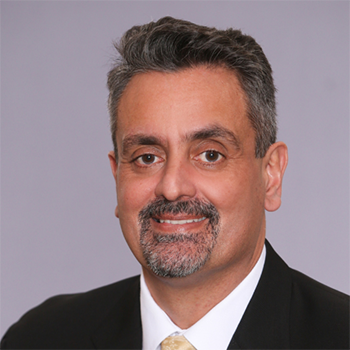
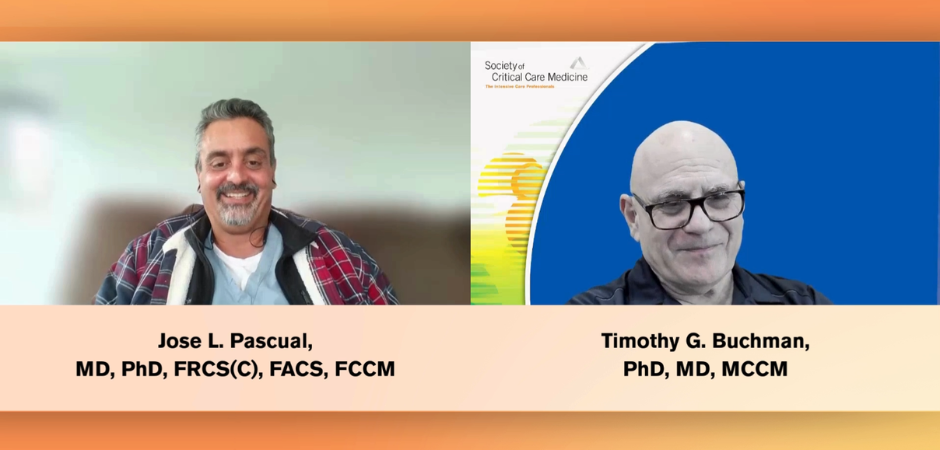
Timothy G. Buchman, MD, PhD, MCCM, has been an integral part of the Society of Critical Care Medicine (SCCM) for more than four decades. He was the founding director of the Emory Critical Care Center and is a past president of SCCM, the Shock Society, and the Society for Complex Acute Illness. He was editor-in-chief of
Critical Care Medicine (
CCM) from 2014 to 2024 and founding editor of
Critical Care Explorations from its launch in 2019 until 2024.
Following are excerpts of an interview that I was fortunate to have with Dr. Buchman during which he reflected on his work with SCCM and discussed his vision of the future of critical care.
Early Years and Leading Multiprofessional Care
If we could start with you telling us a little bit about yourself, your early years before and after entering medical school. Where did you start?
Dr. Buchman: I moonlighted as a nurse assistant in the medical intensive care unit (ICU) at the University of Chicago. It was an eight-bed open unit. Those were challenging days before central lines and, if one needed access, we did cut-downs at the ankle to place an intravenous catheter in the great saphenous vein.
But my interest in critical care was spurred mostly by my residency at Johns Hopkins. Again, in those days, there really wasn't an intensive care service, just the intern or assistant resident going into the ICU from time to time and making sure the patient stayed alive until 7:05 in the morning. It wasn't until I went across town to the R Adams Cowley Shock Trauma Center at the University of Maryland for my fellowship that I began to have an inkling of what a full ICU service really needed to be, with a collaborative team effort that brought together physicians and nurses, pharmacists, dietitians, and so forth. This multiprofessional concept I brought back to Johns Hopkins as the codirector of the surgical ICU.
Eventually I took the first-offered critical care certifying exam. I hold certificate #40 in surgical critical care from the American Board of Surgery. Those were interesting times because we were just at the phase of thinking we knew what we were doing and not far enough along to understand that we didn't know what we were doing.
Over the years, you were the champion of multiprofessionalism and multidisciplinary leadership. How did you foster such a culture across a multiprofessional society?
Dr. Buchman: There were two events that stick vividly in my mind. The first was my first tour of duty as a junior house officer on my first night in the unit. I think everybody has the memory of suddenly realizing how much you don't know and how much you depend on critical care nurses.
I've said this before and I'll say it again. There is no safety device that's ever been conceived, invented, or produced that has been or will ever be more effective than a well-trained critical care nurse at the bedside. That is very clearly the secret sauce, and every experienced critical care physician will have their stories about how a nurse caught something they did or did not do, and the patient did well because the critical care nurse was there.
The second event was in my third year of residency. I had the misfortune to be the driver in a motor vehicle collision where somebody T-boned me, cracked my left kidney, and rammed the head of my femur into the acetabulum. Admitted as a trauma patient, I got to see care from the other side of the sheets, and it looks different when you're the patient. The doctor is there for maybe minutes a day, and all the other people, the nurses and therapists, they're the ones who are really helping you get better.
So I had a good background for multiprofessionalism. I've seen it as a junior house officer and I've experienced it as a patient. The value of multiprofessionalism isn’t just the care, it’s the research, the studies that people become involved in multiprofessionally because they viscerally understand it’s the right thing to do for patients and families.
If you could give a charge to early-career SCCM members today, what would it be?
Dr. Buchman: Question the obvious. One of the things we've learned about critical care is we've matured from knowing nothing to knowing something to knowing that we don't know anything. There is almost no question that cannot be profitably readdressed at this time.
While the first charge is to question the obvious, the second is to realize that the best questions begin locally. You don't have to look in somebody else's backyard to find an interesting question. There are plenty in your own unit, and the systematic collection of knowledge, first by observational studies, then by a thoughtful evaluation of what an experiment might look like, writing something down, and then sending a proposal to the IRB—it's discipline. It takes time, but it can yield all sorts of information about how to make your approach to patient care better.
The moment you shine a light on a problem, the problem takes on different dimensions. That goes for any issue, no matter how trivial: whether we use liquid or bar soap, whether we place the alcohol sanitizer outside or inside the room, whether we start rounds at the same room every day or pick one randomly, or where the sickest patient is—these are all valid questions as to whether different choices make a difference in outcome, and the more we ask about our practice, the more we learn to ask about our practice.
Fostering Trusted Research Through SCCM Journals
COVID-19 stressed every journal, at least that first year. What changed at CCM during the pandemic that you think should remain permanent?
Dr. Buchman: In February 2020, when we gathered in Orlando for SCCM’s Critical Care Congress, it was very clear at the time that two things were going on. The first was that we had a global problem on our hands. The second was that the transformation of data into reliable information that became actionable was a huge problem.
We realized the need to try to distinguish signal from noise and to not publish anything that we didn’t think we were going to be prepared to stand by. In some sense,
CCM was rightly perceived as the “stodgy gray lady.” But people could count on what was published there, knowing that we were not going to turn around in four weeks or four months or four years and say “oops.” I said we need to stick to peer review, hold true to those principles, and say, you may have something important, but we don't have enough confidence that it's going to hold, so maybe this needs to go elsewhere. It wasn't necessarily a popular decision, but it was the right one.
In some sense, publishing in the journal is not merely communication. It's sort of a moral act, right? The authors are held accountable for scientific method, for critique. We asked our editors to look at content and say, does this have face validity? We asked our reviewers to be tough, objective, and say to the authors, tell me how you support this claim.
And all of that, I think, has spoken to the quality of the journal over time, not just during my tenure, but through that of Will Shoemaker as our first editor, Bart Chernow, Joe Parrillo, myself, and now Jon Sevransky. This is not something we do because we're paid a huge amount of money. We devote every weekend and plenty of nights as well. We do that because we’re stewards of a resource that’s there to support critically ill patients around the globe and we have to do it right.
How should journals handle the modern information ecosystem: preprint, social media, podcasts, and the risk of misinformation amplification? Where is the role of the reputable journal in that?
Dr. Buchman: I think you hit the nail on the head with your last adjective. Reputable.
I think that there is an ecosystem, an unfortunate ecosystem, of paper mills that publish for pay, which is literally flooding the market. There are all sorts of preprint servers out there, none of which the lay public can distinguish as different from a high-quality, peer-reviewed product. The secret sauce is to have people volunteer their time as reviewers, as editors, to ensure, insofar as possible that, as an old Zenith ad for TV contended, “The quality goes in before the name goes on.” That's the only defense we have. It's not a best defense; it's the only defense.
And that is why I think that the leadership provided by Robert Tasker, Jonathan Sevransky, and Tamás Szakmány for the three SCCM journals is so important. You have to set the standard high. Where I think there is great opportunity is for individuals with an idea to take the time to pursue that idea, to do so with diligence, and then to support and submit to the Society journals. We don't have good journals without great submissions. So it is a moral act to decide to take your work, submit it for peer review, and ultimately have it accepted for publication in an SCCM journal. It's not just your name on a CV. It is a brick in the foundation of this thing we call critical care.
Moving the Needle in Critical Care
Where have we meaningfully moved the needle in critical care, and where are we still stuck waiting for better models or better measurements?
Dr. Buchman: I think we've moved the needle a lot in terms of early recognition of deviations from sweet spots that matter. We no longer wait for patients to stop breathing. We notice that end-tidal CO2 is going in the wrong direction. We are no longer guessing what the target should be for glucose. We have the studies to say, yes, it should be in this range.
Where we haven't moved the needle is really understanding the questions that we're asking. I'll give you my favorite example: a decade ago, a group of leaders, including many from SCCM—Cliff Deutschman, Craig Coopersmith, and others—came together to create the Sepsis-3 definition. And the definition is very clear: “life-threatening organ dysfunction caused by a dysregulated host response to infection.”
1
The problem is that when you try to implement that in the ICU specifically, or in the hospital generally, you end up with a circular argument. Electronic systems do not flag “Sepsis-3” until a clinician is suspicious of infection and has ordered antibiotics and cultures. The concept is right, but the implementation still falls short. We need to be very thoughtful about what we mean by precision medicine; so much in critical care is not a diagnosis but a statement of condition. And if we don't get these definitions correct, we are actually going to be talking around ourselves, not to each other.
Among all the proposals that I've seen recently, the one that I think will be most transformational is, as SCCM proposed many years ago, the creation of an international registry of critically ill patients. We need to have access to and leverage all the electronic health records that are in place now, to be able to compare and contrast patient groups by phenotype and subphenotype so that we actually are talking about the same groups of patients and what we’re doing for them.
What is clear from so many studies, for example, the arc from PROWESS to PROWESS-SHOCK, is that if the treatment isn't helping, it's almost certainly hurting, and we need to be sorting our treatments and our patients in ways where we have high confidence that we're more likely to help than hurt for that given patient, for that given day, for that given problem.
2,3 It goes back to the tagline of SCCM: Right Care, Right Now. We want to do that for every patient, every time.
We're pretty good at understanding what our tool sets are, and what the what the right care looks like. We're pretty good at making sure there's expertise at the bedside 24/7, whether it's in person or telemedicine or some combination of both.
We're less confident about doing it in every patient and, for any given patient, we're less confident about knowing when the right time is to do it. So, if I were to expand on the vision for the Society and its members and its patients, it's no longer just Right Care, Right Now. It's every patient, every time.
Dr. Buchman discusses launching Critical Care Explorations
, his rubric for which types of research change critical care practice versus which types advance understanding, opportunities for underused ICU data, and more in the full interview on SCCM’s YouTube channel.
References
- Singer M, Deutschman CS, Seymour CW, et al. The Third International Consensus Definitions for Sepsis and Septic Shock (Sepsis-3). JAMA. 2016 Feb 23;315(8):801-810.
- Bernard GR, Vincent JL, Laterre PF, et al. Efficacy and safety of recombinant human activated protein C for severe sepsis. N Engl J Med. 2001 Mar 8;344(10):699-709.
- Ranieri VM, Thompson BT, Barie PS, et al. Drotrecogin alfa (activated) in adults with septic shock. N Engl J Med. 2012 May 31;366(22):2055-2064.